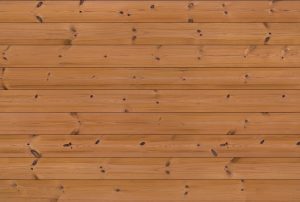
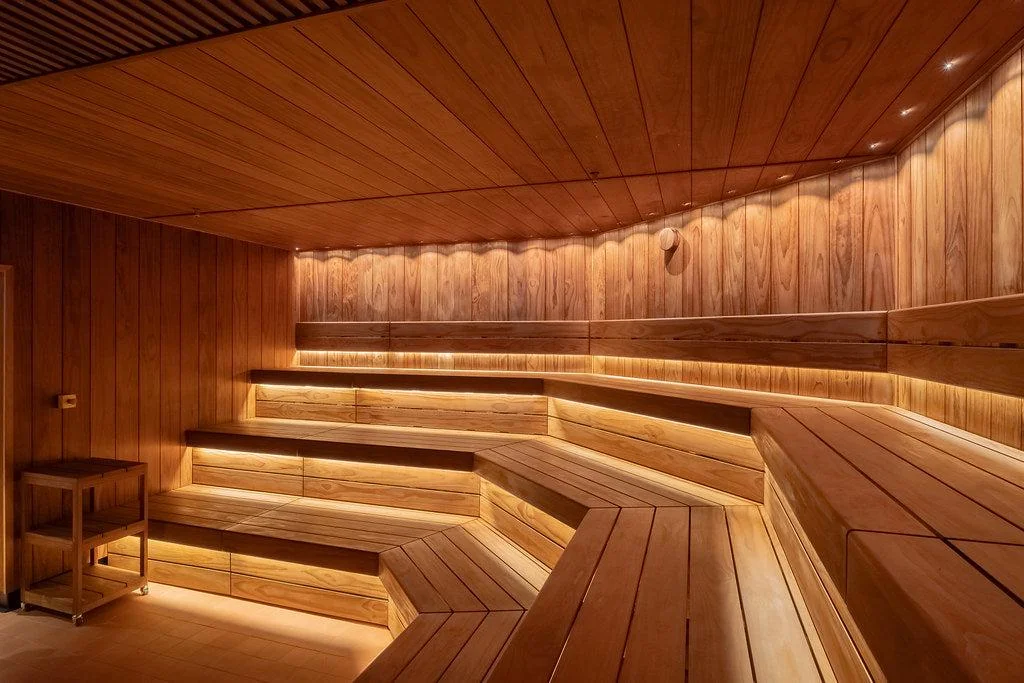
In short: for sauna walls and ceilings choose soft, resin-free wood — aspen, alder or their thermally modified versions (thermo-aspen, thermo-alder). For benches, use only smooth, knot-free boards that don’t get too hot to touch: aspen, alder or thermo-aspen are the safest choice. Ordinary pine and spruce with knots are fine for budget walls, but not for benches — knots heat up and can release resin.
What sauna wood has to cope with
A Finnish sauna heats up to 80–100°C, and the humidity jumps every time water is thrown on the stones. Then the room cools down and dries out again — several times a week, for years. On top of that, people sit and lean on the wood with bare skin. So good sauna wood has to:
- stay comfortable to touch — low density and low heat conductivity, so it doesn’t burn your skin;
- release no resin — resin softens in the heat, drips and can stick to skin;
- keep its shape — not crack, cup or twist with constant changes in temperature and humidity;
- have no strong smell or splinters — the sauna is a place to relax, not to pick out splinters.
Sauna woods compared
| Wood | Best for | Colour | Character |
|---|---|---|---|
| Aspen | Walls, ceilings, benches | Very light, almost white | Resin-free, splinter-free, doesn’t get too hot |
| Thermo-aspen | Walls, ceilings, benches | Warm brown through the whole board | Resin-free, more stable and moisture-resistant than ordinary aspen |
| Alder | Walls, benches | Warm, reddish | Resin-free, water-repellent, doesn’t overheat, smooth texture |
| Thermo-alder | Walls, benches | Rich, deep brown | Stable and durable, with a luxurious look |
| Thermo-spruce | Walls, benches (knot-free grade) | Medium brown | Heat treatment greatly reduces resin; good value |
| Thermo-magnolia | Walls, benches | Dark, with golden accents | Low density, wide boards, exclusive look |
| Ordinary pine / spruce | Walls only (budget) | Light yellow | Cheapest, but knots and resin — not for benches |

Aspen
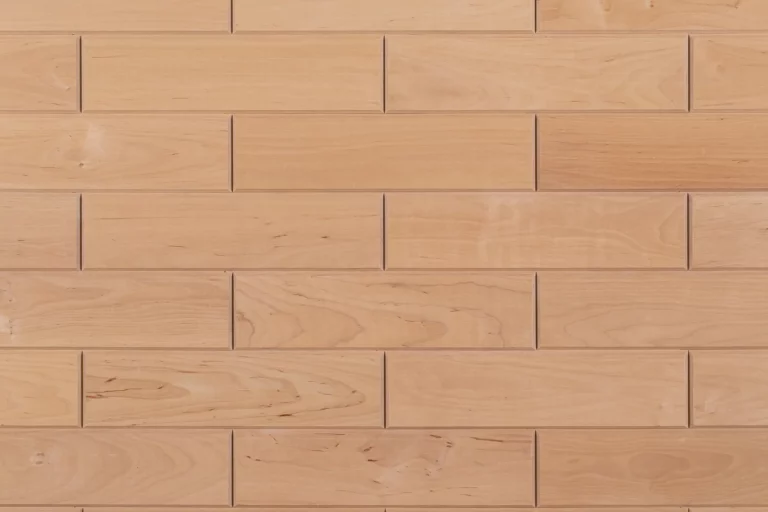
Alder
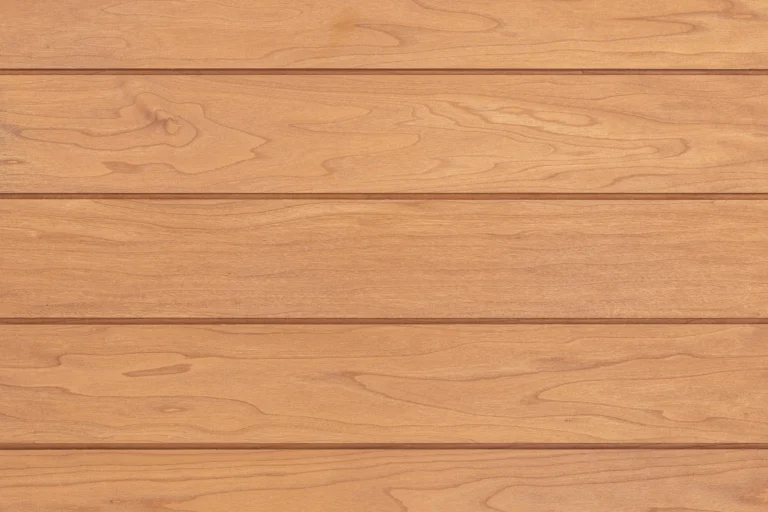
Thermo-aspen

Thermo-alder
Walls and ceilings
Walls and ceilings don’t touch the skin as often as benches, so there is more freedom here. Choose the wood mainly for the look you want:
- A light, Scandinavian sauna — natural aspen or alder.
- A warm, dark, spa-like interior — thermo-aspen, thermo-alder or thermo-magnolia. The colour goes through the whole board, so it doesn’t wear off.
- A modern design — profiled panels with a 3D relief or wide boards create a striking feature wall behind the heater or the benches.
Sauna panels are usually 15 mm thick. At ZeWood you will find classic tongue-and-groove profiles (STS4, Vire), decorative 3D panels (Kyte, Kyte S) and wide thermo-magnolia boards (STS10). See all sauna wall panels →
Benches: the most important choice
Benches are where you sit, lie and touch the wood most — so they need the most careful choice:
- Only knot-free boards. Knots are denser than the surrounding wood, heat up more and can release resin.
- Low-density wood. Aspen, alder and thermo-aspen stay noticeably cooler to the touch than dense hardwoods.
- Rounded edges and hidden screws. Fix the boards from below so that no metal heads touch the skin.
- Boards around 26–28 mm thick and spaced with small gaps, so that water drains and the bench dries quickly.
Thermory’s SHP sauna bench board (26 × 90 mm) comes in aspen, thermo-aspen, thermo-alder, thermo-spruce, thermo-radiata pine and thermo-magnolia, so the benches can match or contrast with the walls. See the SHP sauna bench →
Natural wood or thermowood?
Natural aspen and alder are the traditional choice: light, soft and pleasant to touch. Over time they slowly darken, which is normal.
Thermally modified wood is treated with heat and steam, without chemicals. It absorbs less moisture, moves much less with changes in humidity, resists mould and decay better and keeps a warm brown colour. That makes it especially good for saunas that are used often, for spa and hotel saunas, and for rooms with higher humidity. Read more about thermowood →
Other woods you may hear about
- Western red cedar — durable and with a strong, distinctive aroma. Some people love it, others find the smell too intense in the heat.
- Abachi — a light tropical wood with very low heat conductivity, used mainly for benches.
- Hardwoods such as oak or beech — dense, so they get hot and are not recommended for benches or walls inside the hot room.
Installation and care
- Vapour barrier. Behind the panels, install aluminium foil with the shiny side facing the room and tape all joints, so steam can’t reach the insulation.
- Air gap. Mount the panels on battens, leaving a ventilated gap between the foil and the wood.
- Fixings. Use stainless steel nails or hidden clips, never ordinary steel, which rusts and leaves dark marks.
- No varnish or paint. Ordinary varnishes and paints don’t belong inside the hot room: in the heat they can soften and release fumes, and they stop the wood from “breathing”. If you want extra protection, use only products made specifically for saunas.
- Dry it after use. Leave the door or a vent open after the session so the wood dries completely — that is the best protection against mould.
- Keep the benches clean. Always sit on a towel, and wipe the benches from time to time with a mild solution made for saunas.
For detailed instructions, see Thermory’s sauna installation guide (PDF) and the sauna materials catalogue (PDF).
Frequently asked questions
Which wood stays coolest to the touch in a sauna?
Low-density, knot-free woods such as aspen, alder and thermo-aspen. They conduct heat slowly, so they feel comfortable even at 80–100°C. That is why they are the classic choice for benches.
Can I use ordinary pine or spruce in a sauna?
For walls in a budget sauna — yes, if you choose a grade with few knots. For benches — no: knots heat up and the wood can release resin. Thermally modified spruce or pine is a better option, as heat treatment greatly reduces the resin.
Does sauna wood need to be varnished or oiled?
No. Wood inside the hot room is normally left untreated, so it can breathe and doesn’t release fumes in the heat. If you want extra protection, use only products designed specifically for saunas.
Is thermowood safe for a sauna?
Yes. Thermal modification uses only heat and steam, without chemicals. Thermowood releases no resin, stays stable in heat and humidity and is widely used in home and spa saunas.
Where can I see sauna wood in Tbilisi?
ZeWood is the official distributor of Thermory in Georgia. You can see sauna panels and bench boards at our showroom: 75 Ilia Chavchavadze Ave, Building 2, Tbilisi (Mon–Sat 11:00–19:00).