
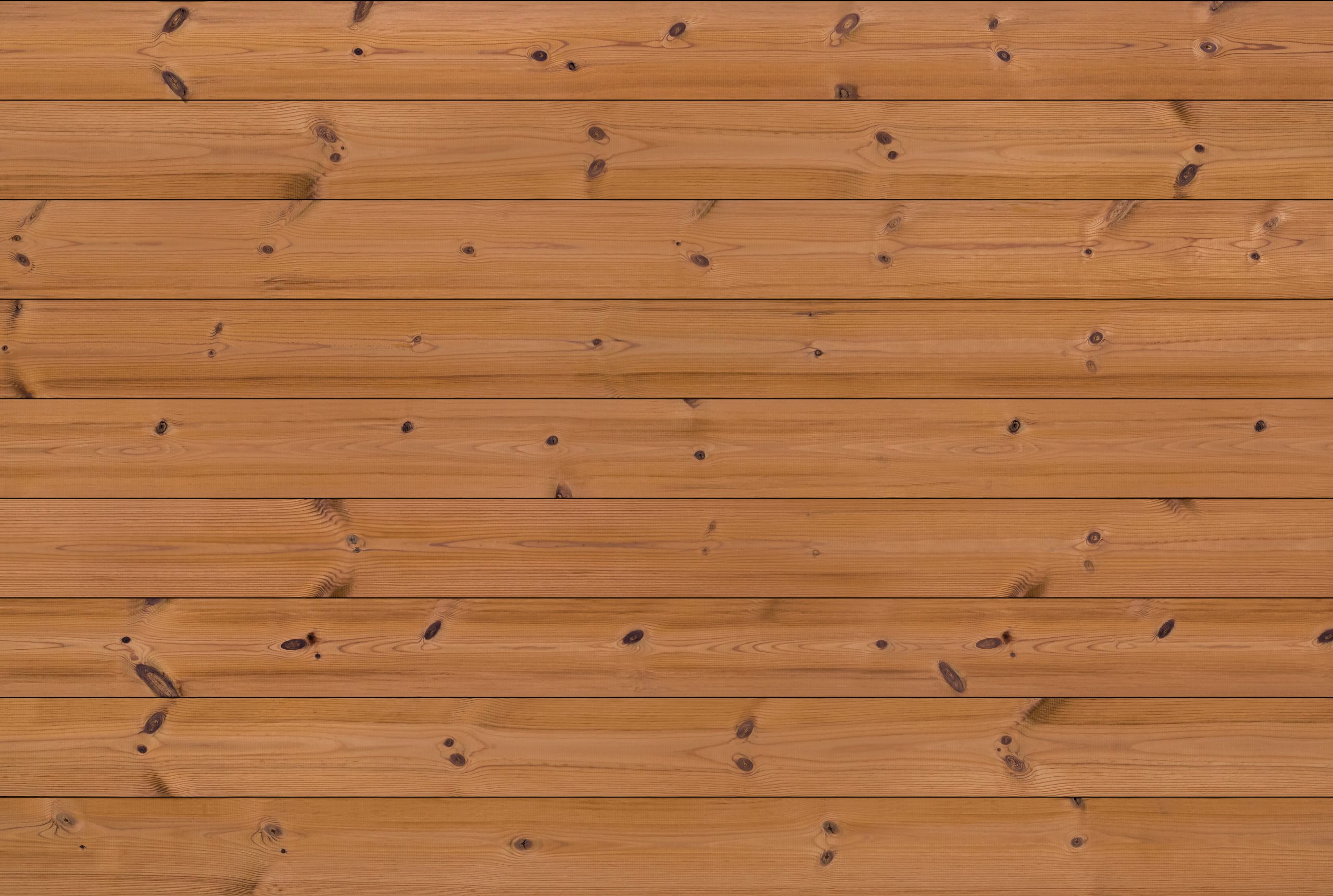
In short: thermowood is natural wood that has been treated in a special chamber at high temperature (around 190–215°C) with steam, without any chemicals. After the process the wood absorbs less moisture, swells and shrinks far less, is much more resistant to decay and takes on an even, warm brown colour. That makes thermowood ideal for cladding, decking and saunas.
How thermowood is made
Thermal modification is a bit like “baking” wood — but under controlled conditions and without oxygen, so the wood never burns. The process has three stages:
- Drying — the wood is gradually dried until its moisture content is close to zero.
- Heat treatment — the temperature is raised to 190–215°C and held for several hours in a steam atmosphere. This changes the internal structure of the wood: hemicellulose — the substance that absorbs moisture and feeds fungi — breaks down.
- Cooling and conditioning — the wood is slowly cooled and its moisture content brought back to around 4–7% so it is ready to work with.
The result is wood that is changed evenly through its whole thickness — not a surface coating that wears off over time.
How it differs from ordinary wood
| Property | Ordinary wood | Thermowood |
|---|---|---|
| Moisture absorption | High | Roughly half |
| Swelling and shrinking | Noticeable — boards cup and crack | Much lower — boards keep their shape |
| Decay resistance | Low (pine, spruce) | High — durability class I–II |
| Chemical treatment | Often needed outdoors | Not needed |
| Resin | Bleeds out, especially in heat | Practically none |
| Colour | Light, uneven | Warm brown through the whole board |
| Weight | Standard | Lighter |
| Bending strength | Standard | Slightly lower — not used as a load-bearing structure |
Where thermowood is used
- Cladding — thermowood cladding boards keep their shape through hot summers and damp winters. Left unoiled, they weather to a beautiful silver-grey patina. See cladding profiles →
- Decking — boards don’t rot, crack less and are pleasant to walk on barefoot, as wood heats up less than composite. See decking boards →
- Saunas — thermowood releases no resin, stays stable in high heat and humidity and keeps a pleasant, warm scent. See sauna materials →
- Interiors — wall panels, ceilings and bathrooms, where humidity changes.
Types of thermowood
Different wood species can be thermally modified, and each has its own character:
- Thermo-pine — the most popular choice for cladding and decking, with a good balance of price and durability.
- Thermo-ash — dense, with a beautiful grain; one of the most durable options for decking and cladding (durability class I).
- Thermo-spruce — light, fine texture, often used on façades.
- Thermo-aspen and thermo-alder — soft, knot-free wood, best for saunas and interiors.
What to keep in mind
- Not for load-bearing structures. Thermowood is a finishing and protective material; frames and joists must be planned separately.
- The colour changes. In the sun, the wood gradually turns silver-grey. To keep the brown tone, oil the surface regularly with a dedicated oil.
- Install it properly. Use stainless steel screws or hidden fasteners, leave ventilation gaps and follow the manufacturer’s installation guides.
Thermowood, composite (WPC) or ordinary wood?
Ordinary wood is the cheapest, but outdoors it needs chemical treatment and frequent maintenance, and it still loses its shape quickly. Composite (WPC) is a mix of plastic and wood flour — easy to maintain, but it gets very hot in the sun, looks artificial and is not a natural material. Thermowood is real wood with natural warmth and scent, yet durable and stable — which is why architects choose it for quality homes, hotels and restaurants.
Frequently asked questions
How long does thermowood last outdoors?
It depends on the species and treatment intensity. Durability class I thermowood (such as thermo-ash) lasts more than 25 years, and class II more than 15 years, when installed correctly.
Does thermowood need to be oiled?
Not for durability. Oil is only needed to keep the colour. If you like the silver patina, you can leave the surface untreated.
Is thermowood chemically treated?
No. Thermal modification uses only heat and steam, so thermowood is safe for people and the environment.
Can thermowood be used in bathrooms or around pools?
Yes. Thanks to its high stability and moisture resistance, thermowood is often used in bathrooms, saunas and around swimming pools.
Where can I see and buy thermowood in Tbilisi?
ZeWood is the official distributor of Thermory in Georgia. You can see samples at our showroom: 75 Ilia Chavchavadze Ave, Building 2, Tbilisi (Mon–Sat 11:00–19:00).